
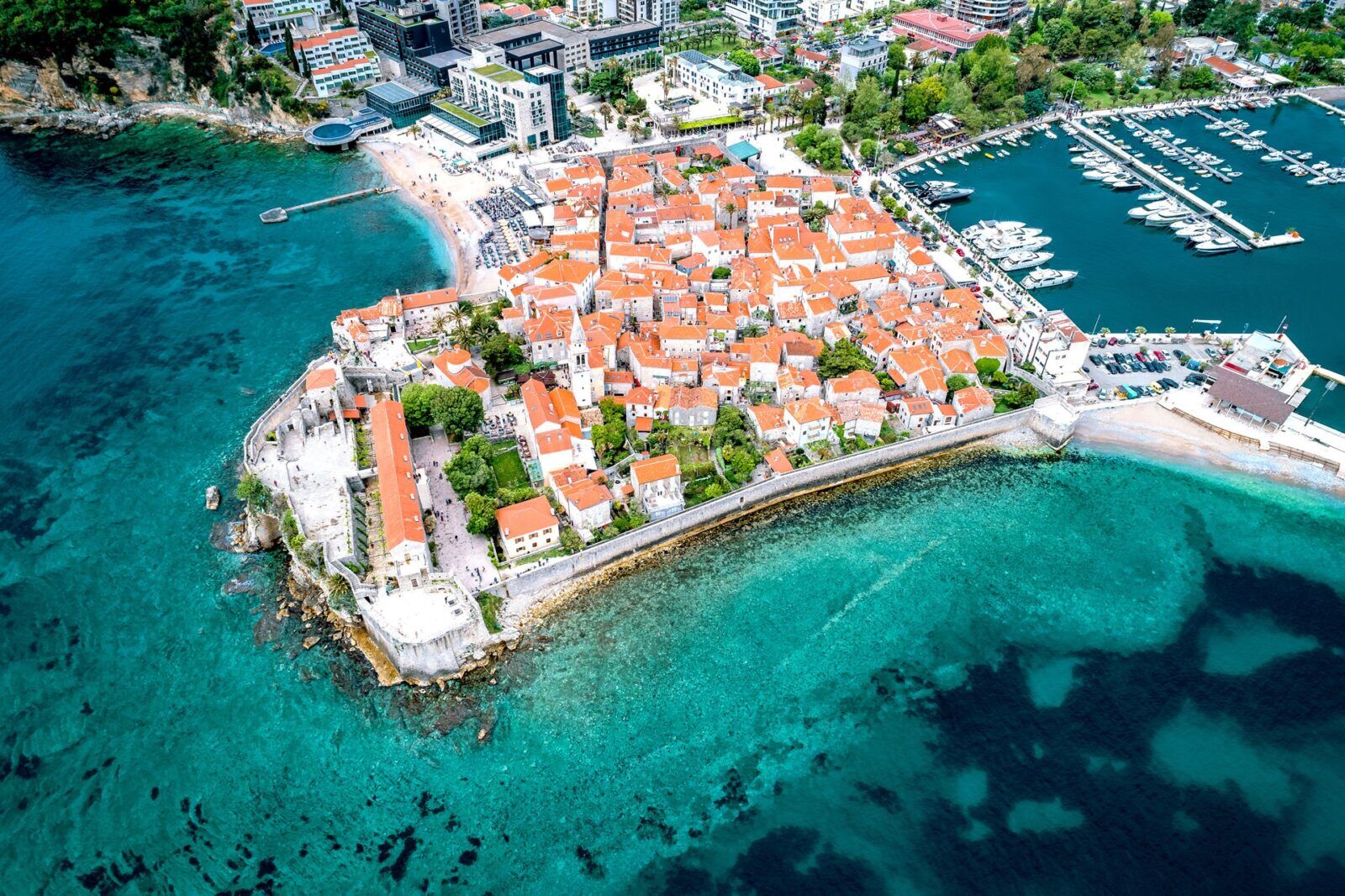
Budva Old Town
Montenegro’s Budva Old Town is a historic peninsula with over 2,500 years of history, featuring medieval Venetian walls, labyrinthine streets, and ancient landmarks like the Citadel and churches, making it a must-visit Adriatic destination.
Historical Significance and Architecture
The Budva Old Town is Budva’s trademark. It is raised on an island, which used to be connected with the land by a sandy covering and so it grew into a peninsula. This unique architectural and urban entity is mentioned as a lodgment even in the antique period. According to those sources, Budva is one of the oldest urban centers in the Adriatic—it is more than 2,500 years old.
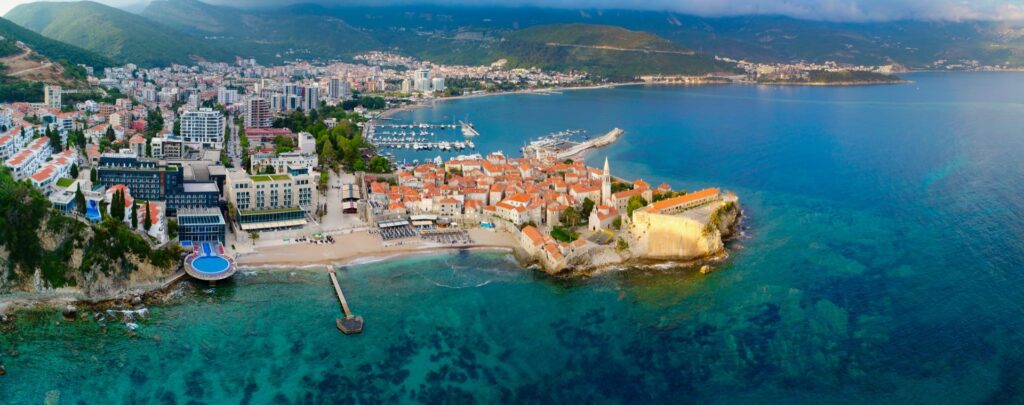
The walls of the Budva Old Town were, and are even today, an attraction for both tourists from the country and those from the farthest parts of the world. They date from the middle century, when Venetians ruled these areas. Consequently, the urban nucleus of the Budva Old Town experienced damage twice, first in 1667 and then in 1979 in great earthquakes.
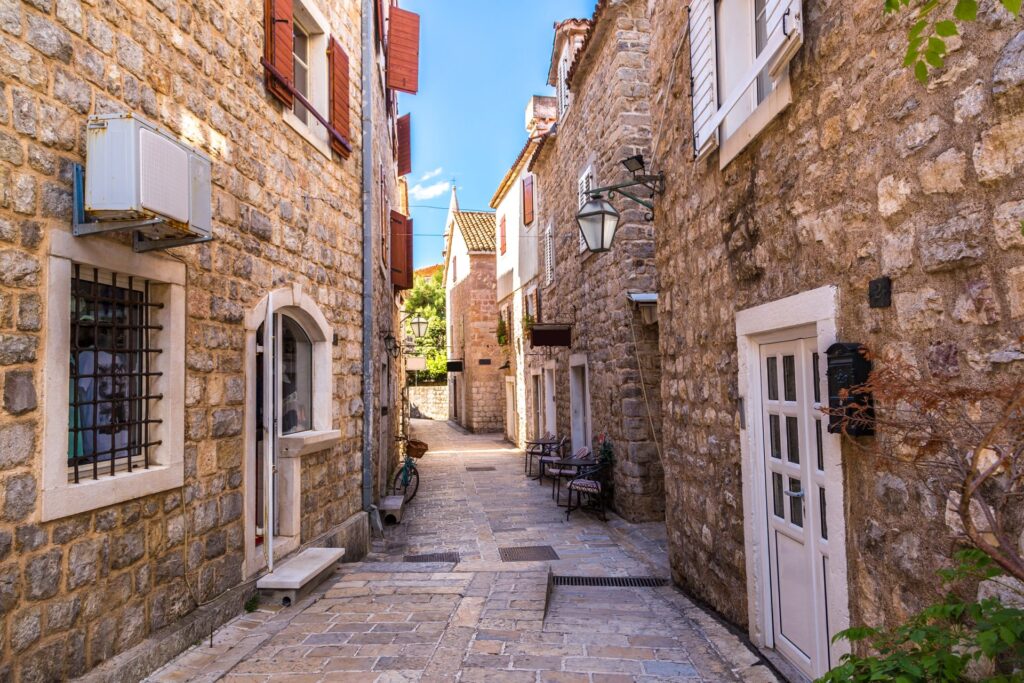
Exploring the Labyrinthine Streets
When you first visit the Budva Old Town, you might think you are in a labyrinth. This is due to the braided streets, squares, bulwarks, and towers from the late middle century.
Key Landmarks and Structures
In the Budva Old Town, the city fortress Citadela (Citadel) is placed. It dates from the V–VI century B.C. and is today a stage of the famous City theater.
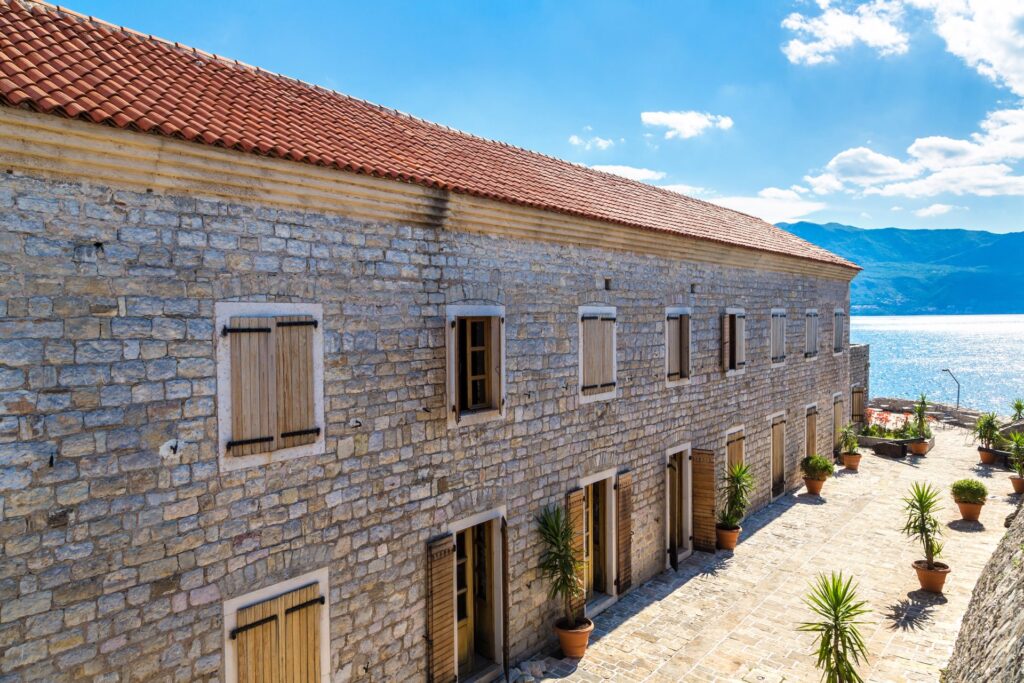
Moreover, the town features Church of Sveti Ivan (St. Ivan), a monumental basilica with three transepts built in the VII century. Additionally, it includes the oldest edifice Sveta Marija (St. Marija) from Punta from 840 A.D. and the church of Sveti Trojica (St. Trinity) built in 1804.